Industrialization as the Root Cause of Acid Rain
In learning about acid rain effects on plants and trees, information from related research studies date as far back as 1963. Scientists noted certain changes in the Earth’s natural water cycle, to which studies revealed altered compositions of water vapors rising in the atmosphere.It was discovered to have increased in acidic content by as much as 100 times over, which gave birth to the term acid rain, referring to the greatly altered atmospheric precipitations. The sulfuric and nitric acid that turned rain water into acid water continued to fill the Earth’s atmosphere as industrialization further heightened the demand for fossil fuel.In recent studies made by scientists from the University of Vermont, the wood cores or rings found in more than a hundred trees of varying species showed that trees began with their growth decline as early as the 1950s. It was gathered that fossil fuels, which could be anything from coal, oil or natural gas came into large use during the Industrial Revolution, which began in England in the mid 18th century. Industrialization came in the wake of several inventions that aimed to make work easier, produce faster and produce more, by burning coal to make the machines work.Today, decades of annual acid depositions from these human activities contributed acidic gases beyond levels of what the Earth could normally handle. The results have been devastating, and it may take several decades more before man can undo all the negative effects of acid rain on plant growth and on other environmental elements.Manifestations of the Effects of Acid Rain on Plants and Forests
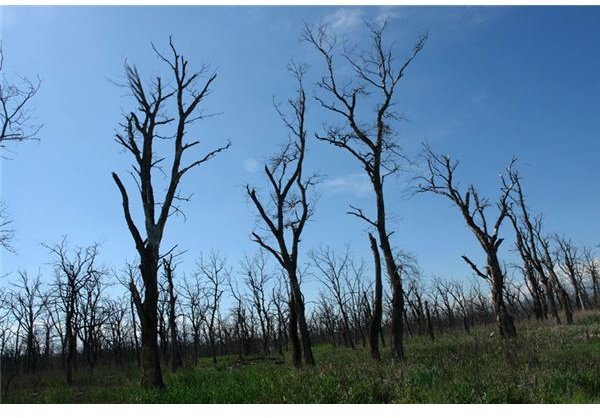
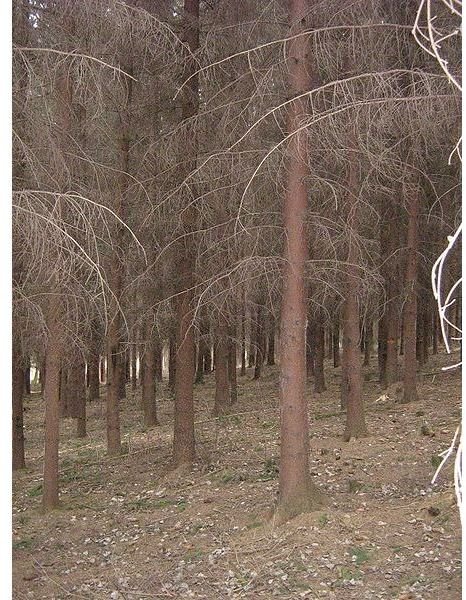
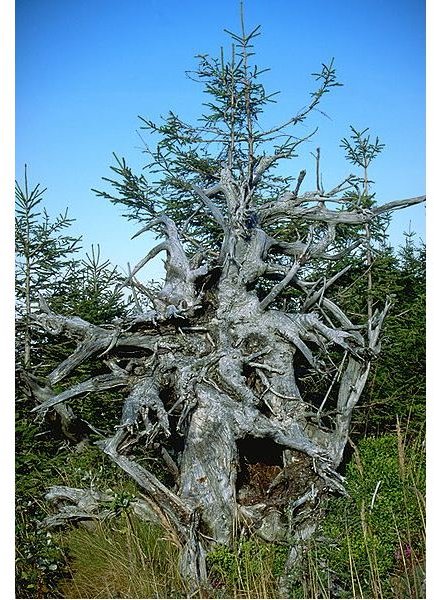
Acid rain that contained strong sulfuric and nitric acids has caused numerous forests all over Europe, to die. Forest areas particularly in Czech Republic, Slovakia and Switzerland covering as much as 200,000 to 300,000 hectares have died from acid rain effects on trees. In recent years, UK reported losses estimated at 25milliion UK pounds when large parts of their territory in Scotland and Cimbria were totally destroyed by acid rain. This did not come as a surprise at all since the areas were recorded to have received the highest input of acidic precipitations.Most European forest areas are still troubled despite efforts to eliminate or curb the use of fossil fuels, as some parts of the European continent receives the most number of rainfalls and snowfalls in a year.In the U.S., the harsh effects of acid rain on plant growth, became evident in the highly elevated forests of Great Smoky Mountain National Parks and Shenandoah, found in the Appalachian Mountains starting from Maine to Georgia. The greatest manifestation of these acid rain effects in the U.S. are the continuing declines of red spruce trees found in Adirondack Mountains, New York, in Green Mountains of Vermont. Unfortunately, those in the White Mountains of New Hampshire have died. As trees are continuously subjected to acid rainfalls, the acid depositions strip the leaves and the needles off of their calcium contents.However, it is not the direct effect of acid rainfall that has caused the trees and plants to lose their foliage, but it is actually the indirect effects of acid rain depositions on fertile soil that are causing plants and trees to wither and dieChanges in the Underlying Chemistry of the Soil as Indirect Effects of Acid Rain on Plants
Forest trees and plant vegetations cannot survive on land that is barren and devoid of nutrients. As acid rains continuously fall on fertile soil, acid depositions containing sulfuric and nitric acid settle and seep in. Thepresence of these acidic substances tends to affect the calcium, sodium, magnesium and potassium which are considered as weak elements in the soil. They are nutrients than can be easily absorbed by the roots of trees and plants in order to grow and survive.However, this process was altered by the presence of acidic substances that influences ions to attach themselves to the clay instead. Hence, plant and tree roots are unable to absorb and utilize the nutrients for growth and development. As the latter remain in the soil, they evaporate and go back to the atmosphere.The sulfuric and nitric depositions of rainwater can also cause the aluminum content in rocks to leach and dissolve in soil water. The presence of aluminum in soil water, adversely affects the roots' capacity to absorb and distribute nutrients throughout the plant’s or tree’s system. Aluminum has been established as having harmful effects to plants because the substance prevents calcium absorption. In addition to aluminum, concentrations of sulfuric and nitric acids have accumulated in the soil and are likewise being absorbed by the trees or plants.Soil that has high acidic content decreased the presence of soil bacteria that can release the calcium, magnesium, phosphate and other nutrient giving agents in decaying leaves and other rotting materials. Hence, the nutrients that were lost or utilized could not be replenished.As a result, the acidified soil and the presence of aluminum have caused the forest plants and trees to wither and die.Acid Rain Effects on Plant Growth
These are the similar occurrences brought about by acid rain on farm lands used for crop vegetations. Acid rain strips arable land of the nutrients needed to sustain the growth and propagation of crops. However, unlike forest soil, which does not receive aid from human intervention, farm lands are treated with soil lime in order to counter the indirect effects of acid rain on the crops.Yet laboratory results related to studies of the effects of acid rain produced mixed results. These prevented scientists and chemists alike to pinpoint the exact causes of crop failure. A few theories offered include the premise that some plants and trees have stronger tolerance to acid depositions of sulfuric and nitric acids.Another possibility is that the combined effects of acid rain with O3 or the bad ozone, formed due to the chemical reaction of nitrogen oxide with Volatile Organic Compound or VOC. The greatest degree of degradation take place in urban areas, where large concentrations of O3 are found. On the other hand, the high elevation of forests brings the plants and trees nearer to the O3 in the atmosphere which is in fact called, ground level ozone layer.There is no doubt that acid rain effects have caused the environment great amounts of distress. In fact, infrastructures and human health conditions have also shown considerable damages from the accumulated and combined effects of pollution and acid rain. Although counter measures and regulations against acid rain effects on plants and trees are being implemented, the greater question is, how many more trees or even forests will die before those measures could result to positive effects?
Wednesday, May 29, 2013
Learn about the Effects of Acid Rain on Plants and Trees


Acid Rain Affect Plant Growth: Air Quality Issues of Electricity Production
What is acid rain?
The term "acid rain" is used to describe rain, mist or snow that is unusually acidic. A pH value is the measure of acidic or alkaline material. The lower the pH, the higher the acid reading. Rain and snow are naturally slightly acidic due to naturally occurring chemical reactions in the atmosphere. Compared to normal rainwater with a pH readings of 5.6, the Eastern U.S. suffers from some of the most severe acid rain, with levels typically reading at 4.4, though some locations in the west also face severe impacts.
The burning of fossil fuels generates air pollution that scientists have determined is the major cause of acid rain. Power plants, along with factories and vehicles that also burn fossil fuels, all emit sulfur dioxide (SO2) and oxides of nitrogen (NOx). When combined with moisture in the atmosphere, these pollutants are returned to the earth as acids. This process is known as "deposition" and occurs when it rains or snows, but it can also occur when dust settles out of the atmosphere during dry periods.
Acid precursors can be carried in the atmosphere for several days and travel several hundred miles downwind of the power plant stack before being deposited on the earth's surface. Because of prevailing winds, the northeastern United States and Canada receive significant quantities of acid precursors from coal-fired power plants in states stretching from Missouri to the west and Pennsylvania to the east.
What are the consequences of acid rain?
Acid rain is linked to a range of negative impacts on the natural world as well as human environments:
Aquatic impacts Scientists believe that acid rain is responsible for the dramatic disappearance of brook trout and other fish species from pristine lakes and streams. These treasured water bodies receive acid directly from the atmosphere and from runoff from the surrounding watershed. Of the lakes and streams studied in a National Surface Water Survey conducted by the US Environmental Protection Agency, acid rain was determined to cause acidity in 75 percent of the acidic lakes and 50 percent of the acidic streams analyzed. Some lakes are particularly susceptible to acid rain since the underlying soil has limited ability to neutralize, or "buffer," the acids. Lakes suffering from chronic acidity can be found in several regions of the United States and Canada, including the Adirondacks, the mid-Appalachian highlands, the upper Midwest and the high elevation West.
Aquatic species vary in their tolerance to elevated levels of acidity. The acid interferes with reproduction much sooner in some especially sensitive species than with others. Generally speaking, acid rain fosters a shift in fish population from acid-sensitive to acid-tolerant fish and other aquatic plant and animal species.
Forest impacts
Acid rain may render intense impacts on the health of forest ecosystems. According to the National Assessment Precipitation Assessment Program's 1998 Biennial Report to Congress, the current mortality and decline of high elevation red spruce populations in the Northeast, and decline in growth rates for Appalachian red spruce, "are the only cases of significant forest damage for which there is strong scientific evidence that acid deposition is a primary cause." Nonetheless, several recent studies conducted by the United States Geological Survey and others point to acid rain as contributing to long-range damage to forests by depleting calcium, a nutrient vital to plant growth.
Materials
Acid rain affects many types of materials, from objects of particular historical artistic or cultural value -- buildings and monuments -- to more ordinary objects such as cars and trucks. Acid rain, especially in the "dry" form, corrodes metal, and accelerates the deterioration of stone and paint.
Visibility
Sulfur dioxide emissions reduce visibility when they form sulfate particles in the atmosphere. Visibility reductions are most pronounced in the eastern part of the United States, particularly in and around national parks. How does electricity production contribute to acid rain? Electricity generation accounts for the lion's share of air pollutants that spawn acid rain. Every year, the nation's fossil fuel power plants spew roughly 70 percent of SO2 emissions and 30 percent of NOx emissions that are critical ingredients in making acid rain.
Of course, not all power plants generate the same level of air pollutants contributing to acid rain. Emissions rates vary widely depending upon factors as the precise fossil fuel type used, the nature of the combustion process, pre- and post-combustion air emission controls, as well as vintage of the power plant. Older coal plants exempt from modern clean air standards under "grandfathering" provisions of the Clean Air Act (especially those designed to burn high sulfur content coal) are at one extreme and are the most significant source of acid rain pollutants. These power plants are highly concentrated in the Ohio Valley and Midwest. Given the prevailing winds, these older, largely uncontrolled pollution sources exacerbate the acid rain experienced in the Northeast.
On the other end of the spectrum are new natural gas-fired generation fitted with best available control technology. They release a fraction of the SO2 produced by coal-fired power plants. However, the performance of natural gas plants is decidedly more mixed in the area of NOx emissions, the other major precursor of acid rain. Although possible to mitigate NOx emissions using advanced technologies, many gas-fired power plants now in service use older, more polluting technologies.
How can consumer electricity choice address acid rain?
Competition in the electricity industry offers consumers for the first time the opportunity to directly influence the environmental footprint of electric power production. In several states, suppliers are assembling electricity resource portfolios that are significantly cleaner than the status quo. By selecting one of these resource portfolios, which boost the amount of renewable energy sources in the fuel mix, consumers can help ensure that the emissions of pollutants that cause acid rain are reduced. Consumers can send a powerful signal to electricity suppliers that they demand their supply not include power from older coal power plants exempt from the nation's federal air quality standards. These dirty power plants have increased their power production recently in response to wholesale competition. Between 1995 and 1995 [typo in the draft REPP report - need to find actual date - I assume the date should be 1996], a single Midwestern utility increased coal-fired generation by 10 percent, which increased its share of NOx emissions by over 50,000 tons. That increase in NOx emissions from a single utility surpasses the total NOx emissions from all fossil power plants operating in Massachusetts and New Hampshire combined.
Monday, April 22, 2013
Air Pollution & Air Quality: Acid rain

Acid rain is a popular term for the atmospheric deposition of acidified rain, snow, sleet, hail, acidifying gases and particles, as well as acidified fog and cloud water. The increased acidity of these depositions, primarily from the strong acids, sulfuric and nitric, is generated as a by-product of the combustion of fossil fuels containing sulfur or nitrogen, especially electrical utilities (power plants.) The heating of homes, electricity production, and driving vehicles all rely primarily on fossil fuel energy. When fossil fuels are combusted, acid-forming nitrogen and sulfur oxides are released to the atmosphere. These compounds are transformed chemically in the atmosphere, often traveling thousands of kilometers from their original source, and then fall out on land and water surfaces as acid rain. As a result, pollutants from power plants in New Jersey, Ohio or Michigan can impact forests, rivers or lakes in less developed parts of New Hampshire or Maine.
Acid rain was discovered in 1963 in North America at the Hubbard Brook Experimental Forest, in the White Mountains of New Hampshire at the initiation of the Hubbard Brook Ecosystem Study. The first sample of rain collected there had a pH of 3.7, some 80 times more acidic than unpolluted rain. Innovations for reducing fossil fuel emissions, such as scrubbers on the tall smoke stacks on power plants and factories, catalytic converters on automobiles, and use of low-sulfur coal, have been employed to reduce emissions of sulfur dioxide (SO2) and nitrogen oxides (NOx). As a result of increasing global economies, fossil fuel combustion is increasing around the world, with concomitant spread of acid rain, especially in areas such as China.
Precipitation chemistry

The source of the acids in the atmosphere is largely the result of the combustion of fossil fuels that produce waste by-products including gases such as oxides of sulfur and nitrogen. Oxidized sulfur and nitrogen gases are acid precursors in the atmosphere. For example, SO2reacts with water in the atmosphere to yield sulfuric acid:
SO2 + H2O + ½O2 = H2SO4
An analogous reaction of water with nitrogen oxides, symbolized as NOx, yields nitric acid (HNO3).
Ammonia (NH3) is a by-product of some natural processes, as well as agricultural sources (e.g., application of nitrogen-containing fertilizers; emissions from intensive animal feedlots, such as decomposition of organic matter). In its dissolved form, ammonium (NH4+) contributes acidity to surface waters through the process of nitrification.
In addition to wet deposition (rain, snow, and fog), acidic deposition includes the deposition of dry, particulate, and gaseous acid precursors that become acidic in contact with water. This dry deposition is difficult to quantify and expensive to measure. Inferential methods indicate that dry deposition represents 20% to 80% of the total deposition of acids to the landscape, depending on factors such as location, season, and total rainfall.

Natural sources can also contribute additional acidity to precipitation. Natural emissions can come from wetlands and geologic sources. Major natural sources of NOx include lightning and soil microbes. Organic acidity may arise from freshwater wetlands and coastal marshes.
It is those natural sources that lead to the inference that pre-industrial precipitation in forested regions had a pH around 5.0. If true, then modern precipitation in the North and East is two to three times more acidic than pre-industrial.
The acidity of precipitation is still subject to misunderstanding. Even in pristine environments, precipitation pH is rarely controlled by the carbon dioxide (CO2) reaction that has an equilibrium pH of 5.6:
H2O + CO2 = H2CO3
Because of the many sources of acidity in precipitation, pH 5.6 is not the benchmark ‘normal’ pH against which the acidity of modern precipitation should be compared. Precipitation is a variable and complex mixture of particulates and solutes derived from local sources and long-range transport. For example, in arid or partly forested regions, dust from soil and bedrock typically neutralizes both the natural and human sources of acidity in precipitation, yielding a solution that may be quite basic (pH greater than 7). In the northeastern U.S. and eastern Canada, annual precipitation pH ranges from 4.3 in Pennsylvania, New York, and Ohio, to 4.8 in Maine and maritime Canada.
Effects on surface water quality

Surface water chemistry is a direct indicator of the potential deleterious effects of acidification on biotic integrity. Because surface water chemistry integrates the sum of processes upstream in a watershed, it is also an indicator of the indirect effects of watershed-scale impacts, such as nitrogen saturation,forest decline, or soil acidification.
Acid deposition degrades water quality by lowering pH levels (i.e., increasing acidity); decreasing acid-neutralizing capacity (ANC); and increasing aluminum concentrations. A recent survey in the Northeast concluded that 41 percent of lakes in the Adirondack region are still acidic or subject to short-term pulses in acidity associated with snowmelt or rain storms. In the Catskill region and New England as a whole, 15 percent of lakes exhibit these characteristics. Eighty-three percent of the impacted lakes are acidic due to acid deposition. The remaining 17 percent are probably acidic under natural conditions, but have been made more acidic by acid deposition. This survey presents a conservative estimate of lakes impaired by acid deposition. Data were collected from lakes that are one hectare or larger and included only samples that were collected during the summer, when conditions are relatively less acidic.
Stream data from the Hubbard Brook Experimental Forest, New Hampshire (HBEF) reveal a number of long-term trends that are consistent with trends in lakes and streams across the Northeast. Specifically, the concentration of sulfate in streams at the HBEF declined 20 percent between 1963 and 1994. The pH of streams subsequently increased from 4.8 to 5.0. Although this represents an important improvement in water quality, streams at the HBEF remain acidic compared to background conditions, estimated to be above 6.0. Moreover, a lake or stream’s susceptibility to acid inputs – has not improved significantly at the HBEF over the past thirty years.
Chronic acidification
Surface waters become acidic when the supply of acids from atmospheric deposition and watershed processes exceeds the capacity of watershed soils and drainage waters to neutralize them. Surface waters are defined as ‘acidic’ if their acid neutralizing capacity (ANC, analogous to alkalinity) is less than 0, corresponding to pH values less than about 5.2.
The chemical conditions that define acidity are that acid anion concentrations (sulfate, nitrate, organic acids) are present in excess of concentrations of base cations (typically calcium or magnesium), the products of mineral weathering reactions that neutralize acidity in soil or rock.
The National Surface Water Survey (NSWS) in the United States documented the status and extent of chronic acidification during probability surveys conducted from 1984 through 1988 in acid-sensitive regions throughout the U.S. The NSWS estimated the chemical conditions of 28,300 lakes and 56,000 stream reaches in all of the major acid-sensitive regions of the U.S.
The NSWS concluded that 4.2% of lakes larger than 4 hectares and 2.7% of stream segments in the acid-sensitive regions were acidic. The regions represented in that report are estimated to contain 95% of the lakes and 84% of the streams that have been anthropogenically acidified in the U.S. The Adirondacks had the largest proportion of acidic surface waters (14%) in the NSWS. The proportions of lakes estimated by NSWS to be acidic were smaller in New England and the Upper Midwest (5% and 3%, respectively), but the large numbers of lakes in these regions translate to several hundred acidic waters in each region.
The Valley and Ridge province and Northern Appalachian Plateau had 5% and 6% acidic sites, respectively. The only acid-sensitive region not assessed in the current report is Florida, where the high proportion of naturally acidic lakes, and a lack of long-term monitoring data, make assessment problematic.
A recent survey in the Northeastern U.S. concluded that 41 percent of lakes in the Adirondack Mt. region are still acidic or subject to short-term pulses in acidity associated with snowmelt or rain storms. In the Catskill region of New York and in New England, 15 percent of lakes exhibit these characteristics. Eighty-three percent of the impacted lakes are acidic due to acid deposition. The remaining 17 percent are probably acidic under natural conditions, but have been made more acidic by acid deposition. This survey presents a conservative estimate of lakes impaired by acid deposition. Data were collected from lakes that are one hectare or larger and included only samples that were collected during the summer, when conditions are relatively less acidic.
Stream data from the Hubbard Brook Experimental Forest, New Hampshire (HBEF) reveal a number of long-term trends that are consistent with trends in lakes and streams across the Northeastern U.S. Specifically, the concentration of sulfate in streams at the HBEF declined by about 45% between 1963-2008. The pH of streams subsequently increased from 4.85 to 5.15. Although this represents an important improvement in water quality, streams at the HBEF remain acidic compared to background conditions, estimated to be above 6.0. Moreover, ANC – an important measure of a lake or stream’s susceptibility to acid inputs – has only improved slightly at the HBEF over the past forty-five years.
Biologically-relevant surface water chemistry
The main cause for concern over the effects of surface water acidification in the U.S. and elsewhere is the potential for detrimental biological affects. Typically, there is concern for biological impact if the pH is less than 6. At low pH values,aluminum may be present at concentrations that are toxic to biota, including sensitive life stages of fish and sensitive invertebrates. Aluminum is an abundant and normally harmless component of rocks and soils. However, it leaches from silicate minerals when they come in contact with low-pH waters. While much of the aluminum present in surface waters is organically-bound and relatively non-toxic, certain inorganic species are highly toxic. The best indicator of recovery in biologically-relevant chemistry would be a decrease in concentrations of inorganic monomeric aluminum, the most toxic form. Decreases in total aluminum would also suggest recovery, although the actual magnitude of the improvement in chemical conditions for biota would be unknown because we would not know how much of the decrease is due to inorganic vs. organic forms of aluminum.
Biological effects of acid rain
Effects on forest ecosystems
The 1990 National Acid Precipitation Assessment Program report to Congress concluded there was insubstantial evidence that acid deposition had caused the decline of trees other than red spruce growing at high elevations. More recent research shows that acid deposition has contributed to the decline of red spruce trees throughout the eastern U.S. and sugar maple trees in central and western Pennsylvania. Symptoms of tree decline include poor crown condition, reduced tree growth, and unusually high levels of tree mortality. Red spruce and sugar maple are the species that have been the most intensively studied.
Red Spruce
Since the 1960s, more than half of large canopy red spruce in the Adirondack Mountains of New York and the Green Mountains of Vermont and approximately one quarter of large canopy red spruce in the White Mountains of New Hampshire have died. Significant growth declines and winter injury to red spruce have been observed throughout its range. Acid deposition is the major cause of red spruce decline at high elevations in the Northeast. Red spruce decline occurs by both direct and indirect effects of acid deposition. Direct effects include the leaching of calcium from a tree’s leaves and needles (i.e., foliage), whereas indirect effects refer to changes in the underlying soil chemistry.
Recent research suggests that the decline of red spruce is linked to the leaching of calcium from cell membranes in spruce needles by acid rain, mist or fog. The loss of calcium renders the needles more susceptible to freezing damage, thereby reducing a tree’s tolerance to low temperatures and increasing the occurrence of winter injury and subsequent tree damage or death. In addition, elevated aluminum concentrations in the soil may limit the ability of red spruce to take up water and nutrients through its roots. Water and nutrient deficiencies can lower a tree’s tolerance to other environmental stresses and cause decline.
Sugar Maple
The decline of sugar maple has been studied in the eastern United States since the 1950s. Extensive mortality among sugar maples in Pennsylvania appears to have resulted from deficiencies of base cations, coupled with other stresses such as insect defoliation or drought. According to research studies, the probability of the loss of sugar maple crown vigor or the incidence of tree death increased on sites where supplies of calcium and magnesium in the soil and foliage were the lowest and stress from insect defoliation and/or drought was high. In northwestern and north central Pennsylvania, soils on the upper slopes of unglaciated sites contain low calcium and magnesium supplies as a result of more than half a million years of weathering combined with the leaching of these elements by acid deposition. Low levels of these base cations can cause a nutrient imbalance and reduce a tree’s ability to respond to stresses such as insect infestation and drought.
Effects on aquatic organisms
The biological effects of acidification have been demonstrated in laboratory and field bioassays, with whole-ecosystem acidification experiments, and through field surveys. A number of the species, especially of fish and macro-invertebrates, that commonly occur in surface waters susceptible to acidic deposition cannot survive, reproduce or compete in acidic waters. Sensitive species may be lost even at moderate levels of acidity. For example, some important zooplankton predators are not found at pH levels below 5.6; sensitive mayfly species (e.g., Baetis lapponicus) are affected at pH levels near 6.0; and sensitive fish species, such as the fathead minnow, experience recruitment failure and extinction at pH 5.6 to 5.9.
Decreases in pH and elevated concentrations of aluminum have reduced the species diversity and abundance of aquatic life in many streams and lakes in acid-sensitive areas of the Northeast. Fish have received the most attention to date, but entire food webs are often adversely affected.
Decreases in pH and increases in aluminum concentrations have diminished the species diversity and abundance of plankton, invertebrates, and fish in acid-impacted surface waters in the Northeast. In the Adirondacks, a significant positive relationship exists between the pH and acid-neutralizing capacity (ANC) of lakes and the number of fish species present in those lakes. Surveys of 1,469 Adirondack lakes conducted in 1984 and 1987 show that 24 percent of lakes (i.e., 346) in this region do not support fish. These lakes had consistently lower pH and ANC, and higher concentrations of aluminum than lakes that contained one or more species of fish. Even acid-tolerant fish species such as brook trout have been eliminated from some waters in the Northeast.
Acid episodes are particularly harmful to aquatic life because abrupt changes in water chemistry allow fish few areas of refuge. High concentrations of aluminum are directly toxic to fish and are a primary cause of fish mortality during acid episodes. High acidity and aluminum levels disrupt the salt and water balance in fish, causing red blood cells to rupture and blood viscosity to increase. Studies show that the viscous blood strains the fish’s heart, resulting in a lethal heart attack.
The absence of fish and the presence of aluminum in lakes provides important information about the condition of soils within a watershed. The release of aluminum from the soil into rivers and streams usually indicates that the available calcium in the soil is low and has been depleted. Furthermore, trees growing in such soils may experience greater nutritional stress. Reduced pH is also a contributory adverse impact when herbicides and pesticides are present in natural water bodies, thereby compounding mortality impacts to fish and amphibians.
Effect on soils
Acid deposition has altered and continues to alter soils in parts of the northeastern USA in three ways. Acid deposition depletes calcium and other base cations from the soil; facilitates the mobilization of dissolved inorganic aluminum (hereafter referred to simply as aluminum) into soil water; and increases the accumulation of sulfur and nitrogen in the soil.
Loss of calcium and other base cations
In the past 50-60 years, acid deposition has accelerated the loss of large amounts of available calcium from soils in the Northeast. This conclusion is based on a limited number of soil studies, but at present, calcium depletion has been documented at more than a dozen study sites throughout the Northeast, including sites in the Adirondacks, the White Mountains, the Green Mountains, and the state of Maine. Depletion occurs when base cations are displaced from the soil by acid deposition at a rate faster than they can be replenished by the slow breakdown of rocks or the deposition of base cations from the atmosphere. This depletion of base cations fundamentally alters soil processes, compromises the nutrition of some trees, and hinders the capacity for sensitive soils to recover.
Mobilization of aluminum
Aluminum is often released from soil to soil water, vegetation, lakes, and streams in forested regions with high acid deposition, low stores of available calcium, and high soil acidity. High concentrations of aluminum can be toxic to plants, fish, and other organisms. Concentrations of aluminum in streams at the Hubbard Brook Experimental Forest, New Hampshire (HBEF) are often above levels considered toxic to fish and much greater than concentrations observed in forested watersheds receiving low levels of acid deposition.
Accumulation of sulfur and nitrogen
Acid deposition results in the accumulation of sulfur and nitrogen in forest soils. As sulfate is released from the soil, it acidifies nearby streams and lakes. The recovery of surface waters in response to emission controls has therefore been delayed and will not be complete until the sulfate left by a long legacy of acid deposition is released from the soil.
Similarly, nitrogen has accumulated in soil beyond the amount needed by the forest and appears now to be leaching into surface waters in many parts of the Northeast. This process also acidifies lakes and streams. Forests typically require more nitrogen for growth than is available in the soil. However, several recent studies suggest that in some areas, nitrogen levels are above what forests can use and retain.
Trends in acidification
Regulatory controls initiated in the 1970s and 1990s have had an important impact on the emissions of pollutants that cause acid rain. Especially important is the Acid Rain Program in Title IV of the 1990 Clean Air Act Amendments. The Acid Rain Program has the goals of lowering the electric power industry’s annual emissions of (1) Sulfur dioxide (SO2) to half of 1980 levels, capping them at 8.95 million tons starting in 2010, and (2) Nitrogen oxide (NOx) to 2 million tons lower than the forecasted level for 2000, reducing annual emissions to a level of 6.1 million tons in 2000. In fact, SO2emissions decreased 33 percent from 1983 to 2002 and 31 percent from 1993 to 2002.
Over the past few decades:
- “Wet sulfate deposition, which contributes to the acidification of sensitive lakes, streams, and forest soils, has decreased by more than half in the most intense sulfur deposition areas of the U.S.” (See maps below)
- Some modest reductions in deposition of inorganic nitrogen concentrations have occurred in the Northeast and Mid-Atlantic regions of the U.S., but other areas have not shown much improvement. (See maps below)

These trends indicate significant progress, but acid rain remains a significant long-term issue in the U.S. and elsewhere. Importantly, the emission and atmospheric deposition of base cations that help counteract acid deposition have declined significantly since the early 1960s with the enactment of pollution controls on particulate matter, and the ability of ecosystems to neutralize acid deposition has decreased in some regions. Consequently, lakes, streams, and soils in many parts of the Northeast are still acidic and exhibit signs of degradation linked to acid deposition.
Global Dimensions
Large areas of southeastern Asia are currently being subjected to acid rain or its precursors. China is a leading producer of S02, fueled by rapid economic growth and lack of significant air pollution controls. Along with India, the large increase in the use of fossil fuels has led to increased emissions of both S02 and N0x to the atmosphere. At the same time large amounts of acid-neutralizing particles (dust) in the atmosphere from industrial and agricultural sources has limited or delayed the formation of acid deposition in these areas. It is likely that government regulations of dust emission, because of health concerns, will result in a large increase in acid deposition in these areas in the near future.
Ecosystem recovery from acid deposition
Recovery from acid deposition involves decreases in emissions resulting from regulatory controls, which in turn lead to reductions in acid deposition and allow chemical recovery. Chemical recovery is characterized by decreased concentrations of sulfate, nitrate, and aluminum in soils and surface waters. If sufficient, these reductions will eventually lead to increased pH and acid-neutralizing capacity (ANC), as well as higher concentrations of base cations. As chemical conditions improve, the potential for the second phase of ecosystem recovery, biological recovery, is greatly enhanced.
An analysis of the scientific literature suggests that the following five thresholds can serve as indicators of chemical recovery. If chemical conditions in an ecosystem are above these thresholds, (or in the case of aluminum, are below the threshold) it is unlikely that the ecosystem has been substantially impaired by acid deposition. Conversely, if chemical conditions are below these thresholds, (or in the case of aluminum, above the threshold) it is likely that the ecosystem has been, or will be, impaired by acid deposition.
As chemical conditions in soils and surface waters improve, biological recovery is enhanced. Biological recovery is likely to occur in stages, since not all organisms can recover at the same rate and may vary in their sensitivity to acid deposition. The current understanding of species’ responses to improvements in chemical conditions is incomplete, but research suggests that stream macro-invertebrates may recover relatively rapidly (i.e., within 3 years), while lake zooplankton may need a decade or more to fully re-establish. Fish populations in streams and lakes should recover in 5-10 years following the recovery of the macro-invertebrates and zooplankton which serve as food sources. It is possible that, with improved chemical conditions and the return of other members of the aquatic food web, the stocking of streams and lakes could help to accelerate the recovery of fish.
Terrestrial recovery is even more difficult to project than aquatic recovery. Given the life span of trees and the delay in the response of soil to decreases in acid deposition, it is reasonable to suggest that decades will be required for affected trees on sensitive sites to recover once chemical conditions in the soil are restored.
The time required for chemical recovery varies widely among ecosystems in the Northeast, and is primarily a function of:
- Historic rate of sulfur and nitrogen deposition;
- Rate and magnitude of decreases in acid deposition;
- Extent to which base cations such as calcium have been depleted from the soil;
- Extent to which sulfur and nitrogen have accumulated in the soil and the rate at which they are released as deposition declines;
- Weathering rate of the soil and underlying rock and the associated supply of base cations to the ecosystem; and
- Rate of atmospheric deposition of base cations.
Subscribe to:
Posts (Atom)